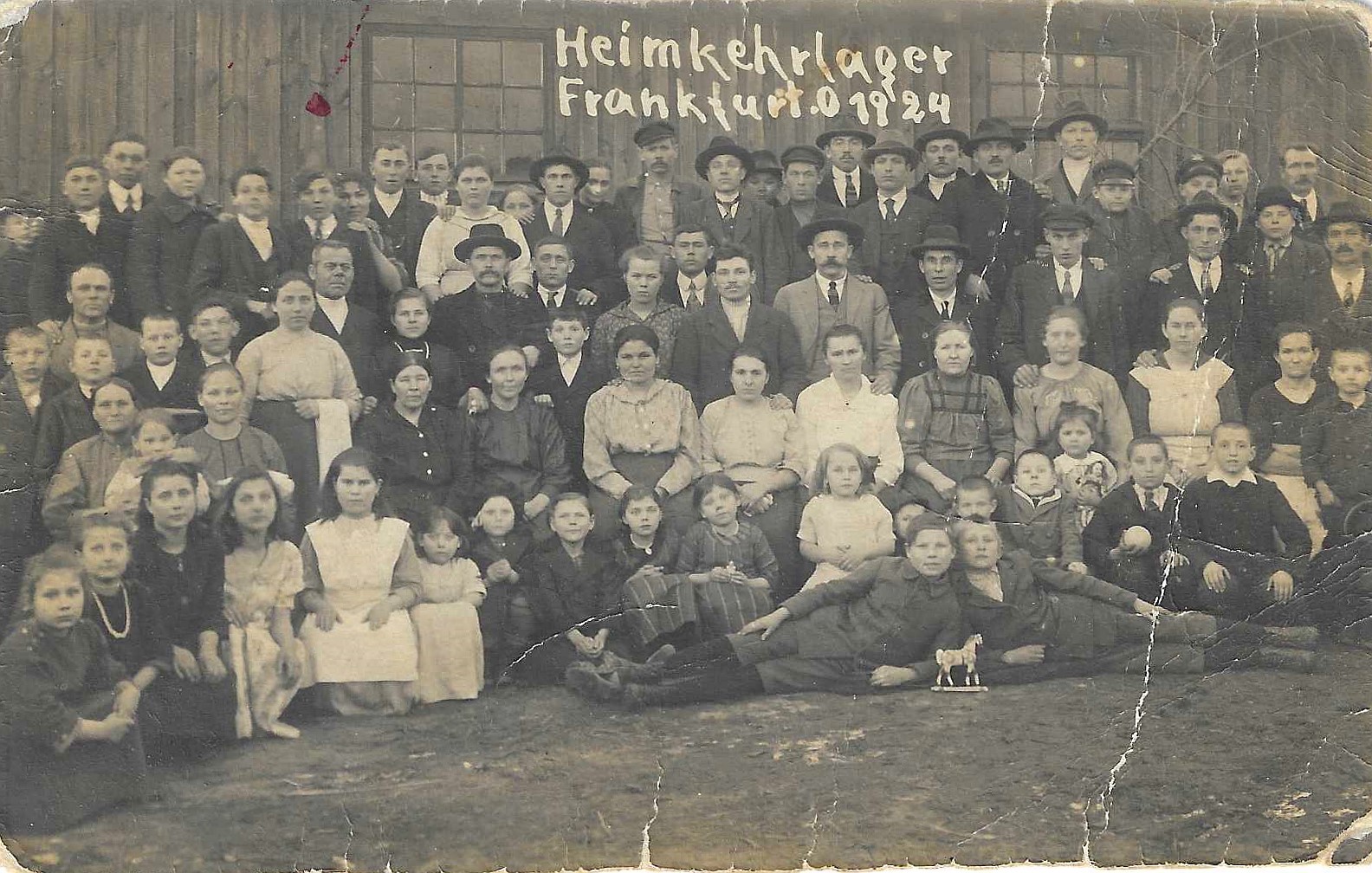
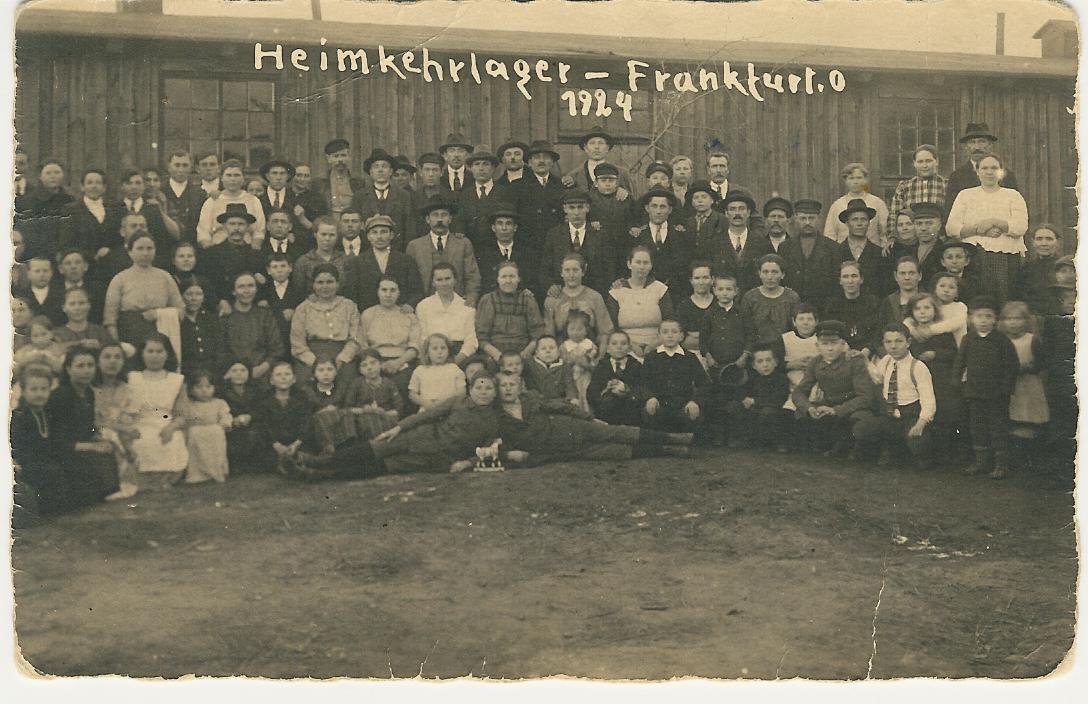
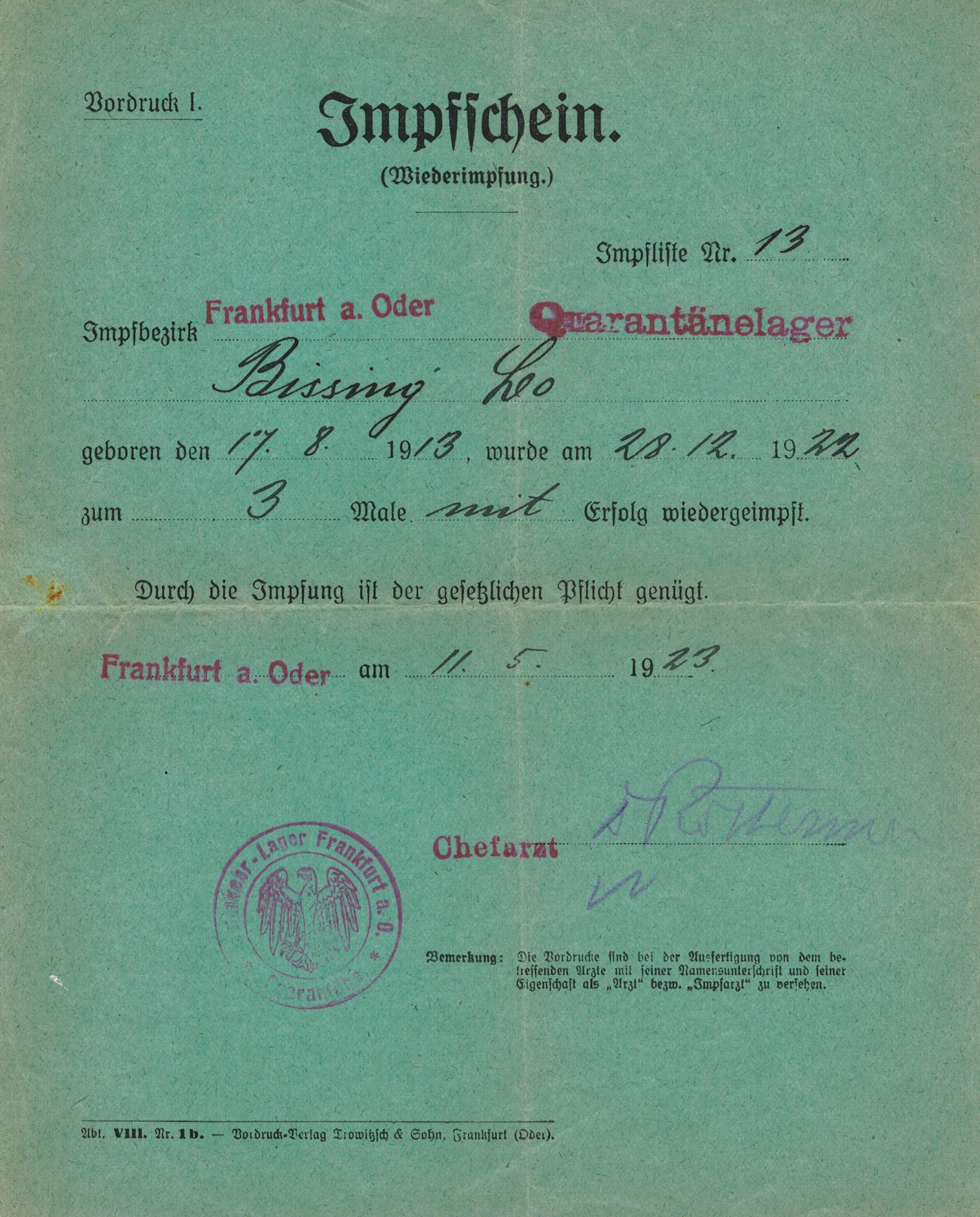
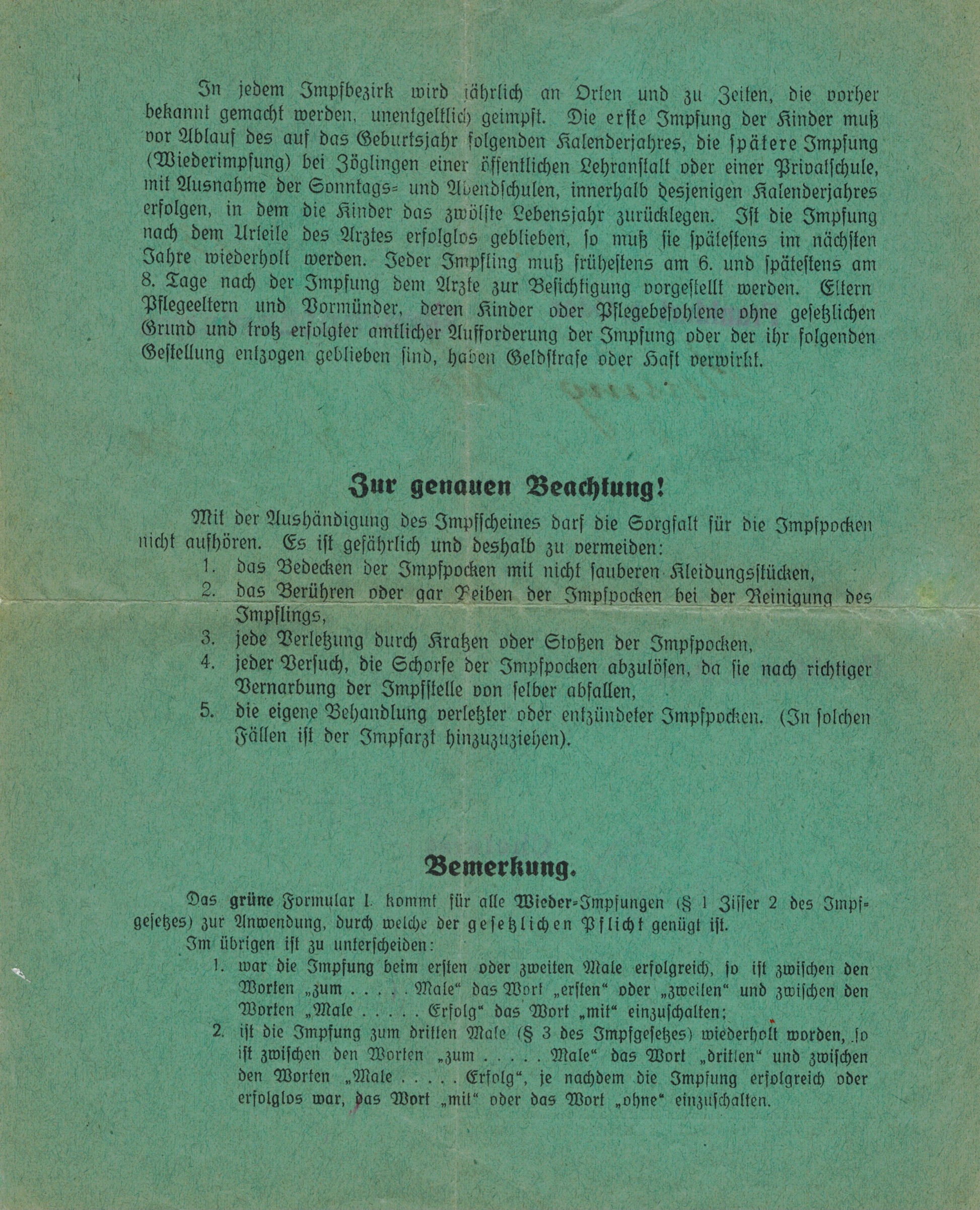
Heimkehrlager Frankfurt/Oder

Documenting a Volga-German Refugee Camp

Refugee Camp Frankfurt a. O.- Das Wolga Journal May 1929

Posted by egerk on October 15, 2009

Refugee Camp Frankfurt a. O.

Dr. Rothermel, Chicago

From: Das Wolga Journal, Volume 3, No.4, May 1929
Translation courtesy Hugh Lichtenwald

                                                          (7. Continued)

 For various reasons, over which the author has no control, this essay had to be interrupted for quite some time. Continuations will once again appear regularly. I come now to speak of one of the most important mechanisms of the camp:

                                            The Volga German Bureau

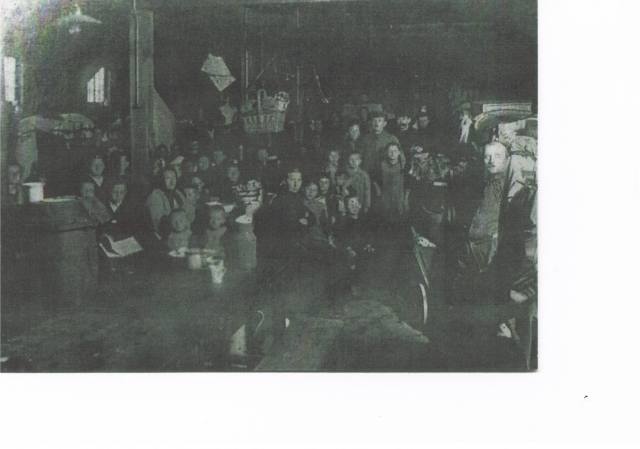
  Immediately following the arrival of the large group of Volga German refugees at the camp, it became necessary to create an organization to coordinate all the complicated aspects of camp life. Medical preparations had been made but there emerged various other questions that the Camp Administration could not solve on its own, which urgently required solutions. Above all, it was necessary to determine exactly how many refugees had arrived, their names, whether protestant or catholic, married or unmarried, etc., etc. The Volga German Society in Berlin asked me to take this problem in hand and accomplish the task. Pastor Friedrich Muth assisted us at the start with his organizational talent and after some “back and forth” I found the men who were to support me in my work. I ask the readers to look at the attached photo.

Read the rest of this entry »

Posted in Das Wolga Journal | Leave a Comment »

Frankfurt a.d. Oder: Das Wolga Journal, April 1928

Posted by egerk on October 15, 2009

Frankfurt a.d. Oder

by Dr. Rothermel

From: Das Wolga Journal, April 1928
Translation courtesy Hugh Lichtenwald

 The other report comes from Titus, the brother of Mr. Sallet who publishes the “Dakota Free Press.” Titus had, through the “Press,” collected money for the camp refugees and he reported on its distribution in the March 5th edition under the title: “Titus among the Refugees at the Frankfurt Camp.” Some portions are reprinted herein: After his discussion with Pastor Altenhausen and his visit with Mother Leimann, he continued:

  ”Dr. Rothermel, the Camp Physician.”

“Wherever I went with Dr. Rothermel, in the hospital, in the orphanage, all eyes turned to him expectantly and hopefully as he passed among them comforting, advising, encouraging, joking and amusing each patient. Every patient was addressed, the young ones as well as the adults, the sick, even the seriously ill children were compassionately caressed and the hard-hearted made to smile happily, and he questioned a sick Russian woman clearly and pleasantly in her native tongue. This I have seen only once before in my long life, as you Neu-Ulmers see daily with your physician, Dr. L. A. Fritsche–human beings at the peak of humanity.”

Read the rest of this entry »

Posted in Das Wolga Journal | Leave a Comment »

Refugee Camp Frankfurt on the Oder: Das Wolga Journal, Dec 1927

Posted by egerk on October 15, 2009

Refugee Camp Frankfurt on the Oder.

 by Dr. Rothermel

From: Das Wolga Journal  No. 8, Dec. 1927
Translation courtesy Hugh Lichtenwald

  In short words, rapidly and energetically, he gave his instructions, then he was once again outside and I accompanied him on his rounds.

  “You have come straight into a witch’s cauldron,” he told me. “The most important questions of the refugees are evenly distributed among these points: Clothing, work, Emigration and the dismantling of the welfare service organization. The relief Doctors, the greater portion of the Sisters and Camp employees have been dismissed. The government must balance its expenditures by making drastic cuts. And then there is unemployment, frankly, the people have had almost all opportunity and desire for work forced out of them. Recently an order came from the government commissioner that everyone who finds work, even if only temporary work, is to have their Camp Identification Card and Food Card taken away. These people will receive no more food and are also not allowed to reside in the camp any longer, and they are not allowed to return in the future. Now-a-days  we experience the case where some of the Volga Germans who have found good jobs in the neighborhood are being displaced by Polish workers. As they are not “Reichsdeutsche” (Native born) they receive no government support. They would be starving in the streets in a few days, if…” the Doctor suddenly became quiet as an excited, violently gesticulating man approached us.

Read the rest of this entry »

Posted in Das Wolga Journal | Leave a Comment »

Medical Statistics Report from the Heimkehrlager Frankfurt/Oder

Posted by egerk on October 15, 2009

Medical Statistics Report from Heimkehrlager Frankfurt a.O.
By Dr. of Medicine V. Rothermal, Camp Physician

Continuation

From: Deutches Leben aus Russland (Berlin) , No. 2, Feb. 1924
Translation courtesy Hugh Lichtenwald

                                    (Continued)

   We now examine diagram 3: Illnesses by age group. The cases of illnesses among those10-20 years old (330 cases) and among those e 20-30 years old (210 cases) immediately catches our eye, more so since the majority of illnesses are usually associated with infants. Here however, the Volga Germans are affected in their prime. The Flu and above all, Spotted Fever are responsible for this skew in the statistics. It must be considered that the Volga Germans of the youth and adult generations that have recently arrived in Germany had suffered the strains of the journey and had fallen victim to them. This exception is valid for those up to the age of 40. Details follow:

Read the rest of this entry »

Posted in Deutches Leben aus Russland | Leave a Comment »

From the Refugee Camp at Frankfurt a. O.: August 1923

Posted by egerk on July 9, 2009

From the Refugee Camp at Frankfurt a. O.

Wolgadeutsche Monatshefte: Number 15/16; August 1922
Translated courtesy of Hugh Lichtenwald

The Refugee camp Frankfurt a. O. has granted temporary accommodations to thousands of poor Volga German refugees over the last 3 years. There are still well over a thousand of our compatriots there. With mixed emotions I look back at the fate of those who had forsaken their old motherland Russia and come to this their second homeland in this old German city, in whose proximity they found their first admittance.

Behind them, the escape, before them, an uncertain future, bound to their present hard and merciless life as refugees in a strange environment with all its behavioral and moral after effects. Strange humans, who face their fate but are unable to influence it. How deeply has this difficult time without hope, without a goal, entrenched itself in their hearts? How deeply do the after effects of these days still affect them these days? But the Volga German is hard — steel-hard! He wants no more difficulties and restrictions! Finally after a long pilgrimage filled with privations, he lands physically and mentally broken, in the old homeland. The 3 hour trip from the border to Frankfurt arouses new life and hope in him. A new goal forces itself upon his consciousness.

Read the rest of this entry »

Posted in Wolgadeutsche Monatshefte | Leave a Comment »

Medical Statistics Report from Heimkehrlager Frankfurt a.O.: 1923

Posted by egerk on July 9, 2009

Medical Statistics Report from Heimkehrlager Frankfurt a.O.
By Dr. of Medicine V. Rothermal, Camp Physician

From: Deutches Leben aus Russland (Berlin) , No. 2, Feb. 1924
Translation courtesy Hugh Lichtenwald

Available statistics covering the illnesses and deaths of the Volga Germans in the Homecoming Camp Frankfurt a.O. from Dec. 6, 1921, the day of arrival of the first Volga German Refugee Transport, up to Nov. 1, 1923. It is presented not only for the interested physician but also and mainly to shed a harsh light on the stressful life — and sanitary conditions of the local inmates. It stands–like no other factor–as a part of the tale of woe, sharply outlining the long chain of miseries and privations which our compatriots were compelled to endure. This retrospection permits us to construct an approximate picture of the earlier fate of the Volga Germans up to the moment when they came to Germany, about which there is presently no authenticated data available. It speaks loudly and sharply to us and brings to us a clear picture of the after effects of the famine in the Volga region and its associated emigrations.

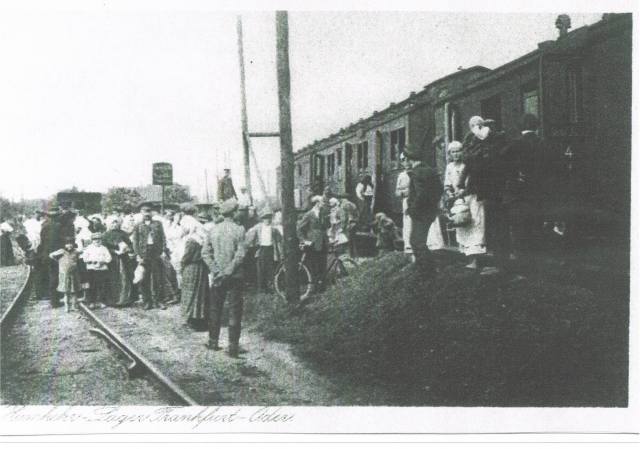
We first turn to the illnesses. In total, there were 1,369 persons that required long term medical care. Of these 186 persons were taken to the City Hospital at Frankfurt a.O. while 1,183 were treated at the camp infirmary. The deaths among this group are not included. The most prevalent disease by far (303) was Spotted Fever (Diagram 1. The Diagram was published in the February issue of our magazine). At that time the camp infirmary did not exist, the camp having only recently been established as a Homecoming Camp from its previous use as a Prisoner of War Camp, and was systematically being built up and expanded. For this reason the patients at first were admitted to the local City Hospital. Of the 186 illnesses which occurred in Dec. 1921, 183 were from Spotted Fever alone. It was a horrible and unforgettable picture that one saw, of tattered, half starved specters, of which the majority lay completely spent and helpless on their beds. Those who were healthy were isolated in the camp but there were always new patients being brought in daily by the railroad.

Read the rest of this entry »

Posted in Deutches Leben aus Russland, Uncategorized | Tagged: | Leave a Comment »

Report and Letter about the Refugees at Frankfurt a.O., Lockstedt and Lechfeld

Posted by egerk on June 14, 2009

Report and Letter about the Refugees at Frankfurt a.O., Lockstedt and Lechfeld
From: Deutches Leben aus Russland (Berlin) , No. 1, 1923
Translation courtesy Hugh Lichtenwald

My friends and acquaintances in America expressed an interest in learning details of the refugee experiences and asked me to visit the refugees. I visited all three of the above named camps and their refugees. There are refugees from all over Russia. One finds people from Volhynia, Cherson, from the Crimea, from the Don region, from Siberia and from the Volga.

History will not forget these three camps. Hundreds and Thousands of forsaken, persecuted, exhausted, starving and homeless refugees have found their first accommodation and acceptance here in Germany. It is to Germany’s honor that it has “broken bread” with these refugees in their crowded barracks and shared its meager supplies during this time of its own great distress and poverty.

The above camps were once Prisoner of War Camps. Today in each of them live 4 to 5,000 refugees. A large organization is necessary to provide accommodations and supply food for these people. Three times a day, meals are delivered to all the refugees. Each camp has its own Administration, Police force, Employment Agency, Post Office and Telegraph, Sanitation Department, Hospital, Doctors, Sisters of Charity (Nuns), a church and a school. For entertainment there are libraries and reading rooms. Every Sunday there are Lutheran and Catholic church services, as well as various lectures.
Read the rest of this entry »

Posted in Deutches Leben aus Russland | Leave a Comment »

Report on the Situation of the Refugees in Camp Stralkowo in Poland: July 1922

Posted by egerk on May 23, 2009

wmjul1922 001Report on the Situation of the Refugees in Camp Stralkowo in Poland
Wolgadeutsche Monatshefte: Number 1; 1 July 1922
Translated courtesy of Hugh Lichtenwald

Owing to the extremely zealous activity of the Posen and Congress-Polish German aid organizations, they have succeeded in significantly improving the situation of the refugees in Camp Stralkowo. On Feb. 6, 1922 the second shipment of food, clothing items and other necessities came to the camp along with an efficient German Nurse from the highly regarded Evangelical Diaconate in Posen. The patients are finally succeeding in recovering to the point of being released. Those in recovery no longer have meals prepared for them and it is recognized as a substantial improvement that they prepare their meals themselves. From donations they still receive fresh supplies of Lard and Flour. Among the various donations were also 4 living chickens and with pride the refugees pointed to them and cried out: “the beginning of a farm is again possible.” Joy and humor are slowly returning. The major task of the Sister is the support of the children, however, as soon as it is possible they are transferred to the Diaconate Institute in Posen. A main problem has for long been the procurement of water. The water pipeline was broken and there was only one well for the 8,500 refugees, among whom there are 500 Germans. Just as difficult was the problem of heating since there was a complete absence of burning material. A second Sister was soon sent to Stralkowo. On May 25, the Volga German Society received the following report from Pastor Kammel, who takes care of the spiritual needs of our brethren:                                                                Read the rest of this entry »

Posted in Wolgadeutsche Monatshefte | Leave a Comment »

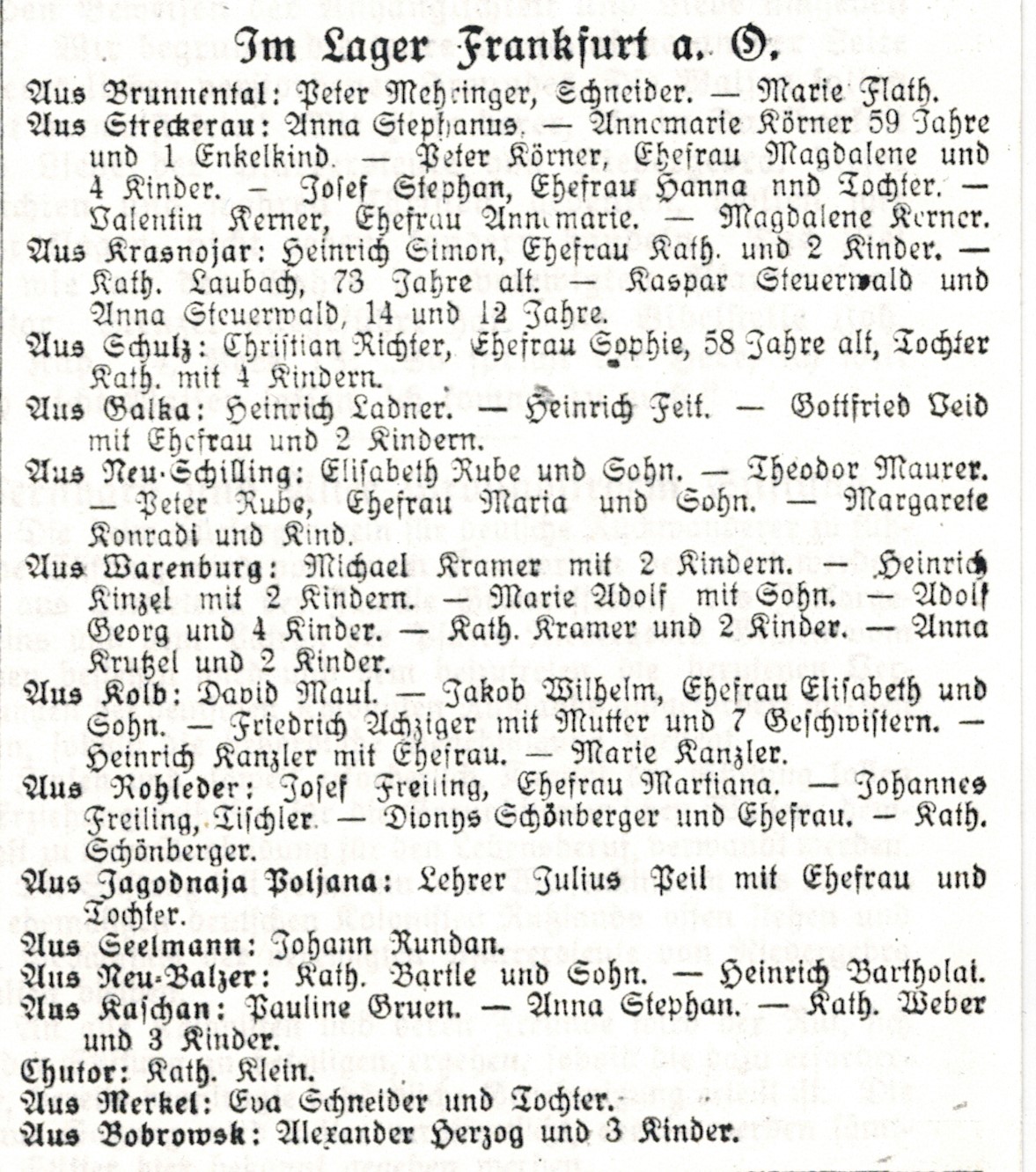
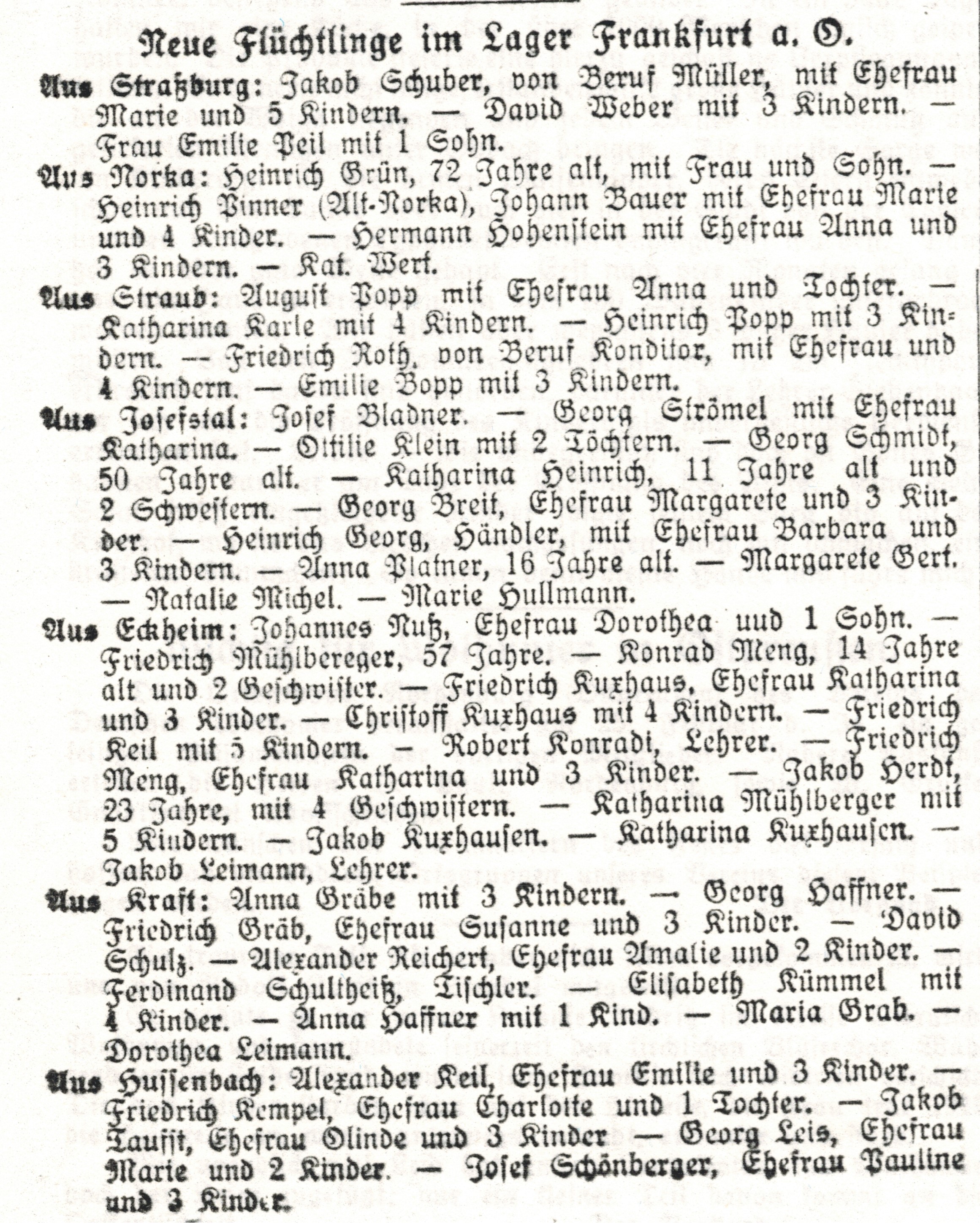
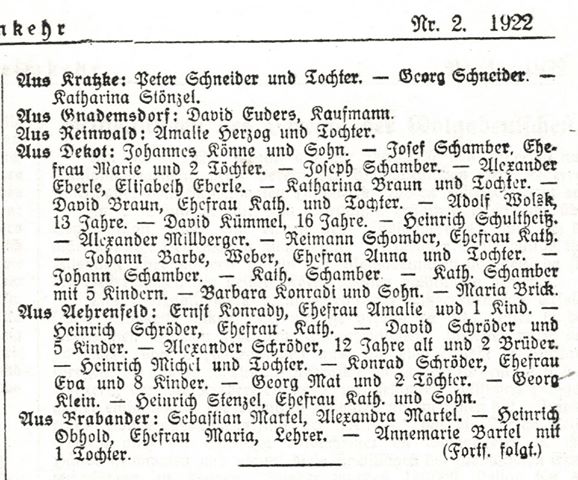
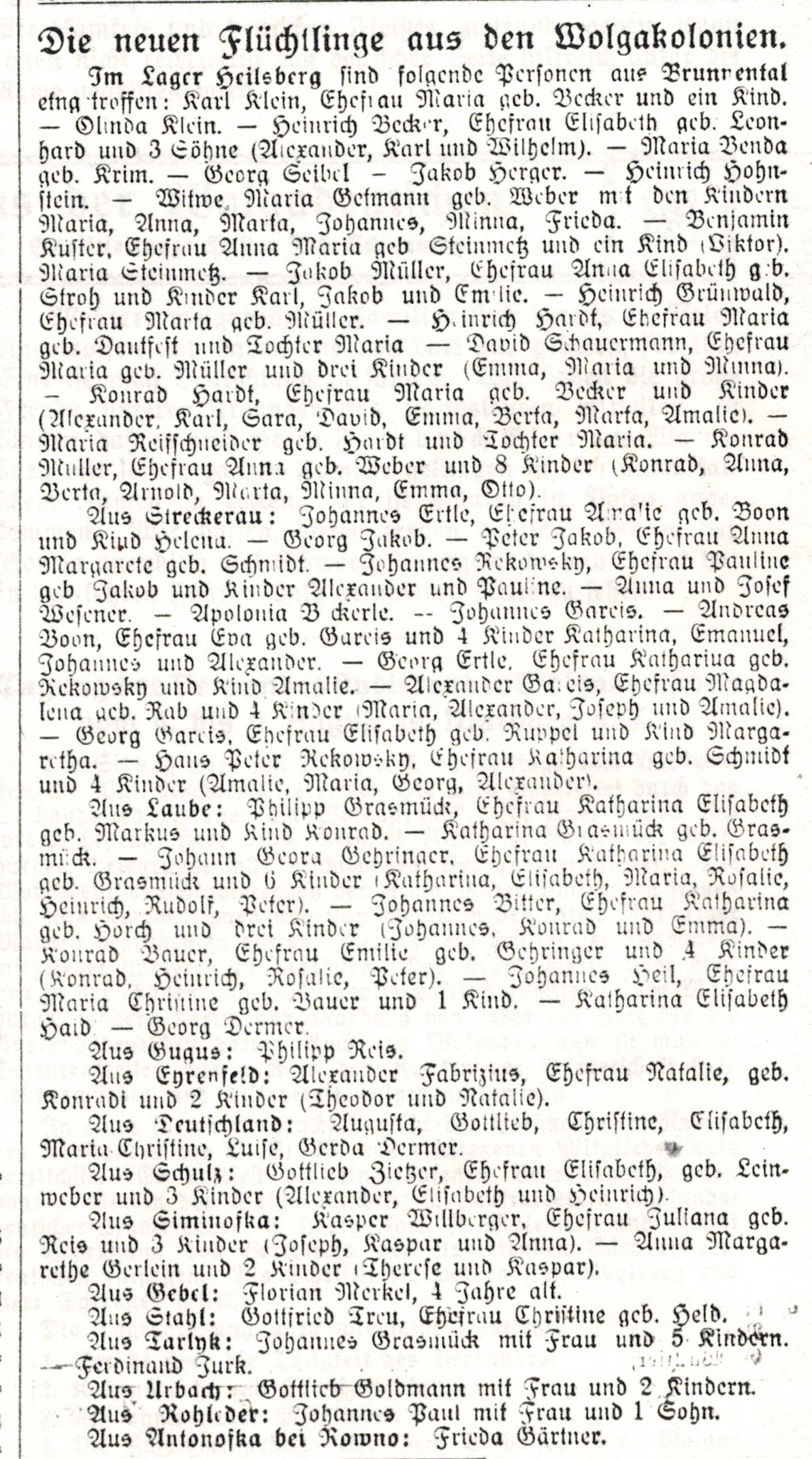
Refugees Arriving in the Heimkehlerlager at Frankfurt/Oder In 1922

Posted by egerk on May 20, 2009

AHSGR Journal Spring 1988


This is a copy of an article I wrote in the Spring 1988 Journal of the American Historical Society of Germans from Russia (AHSGR).

It includes additional lists of Volga German refugees arriving at the refugee camp located in Frankfurt/Oder Germany.

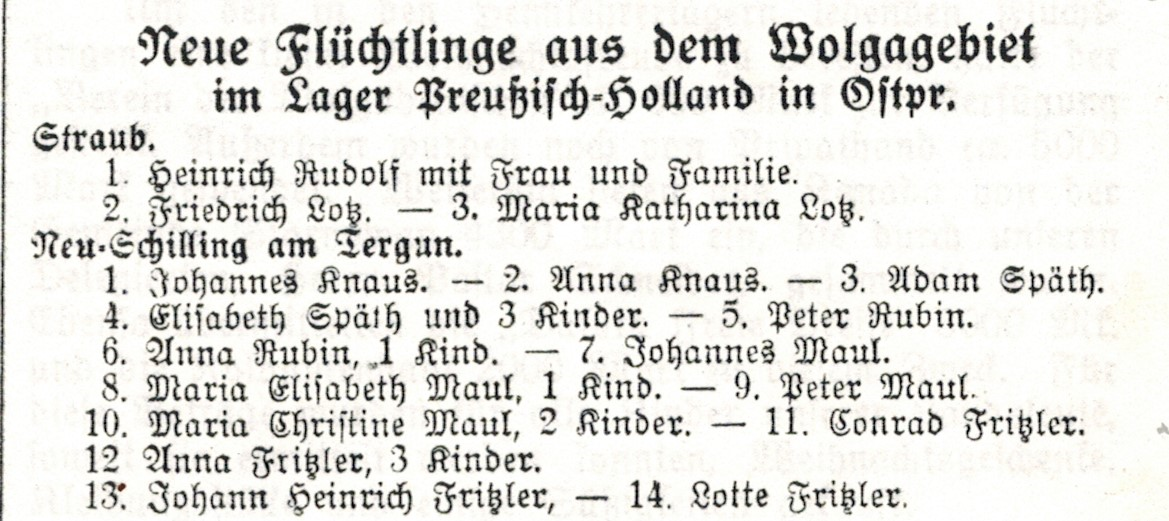
The lists were compiled from editions of the publications Wolgadeutsche Monatshefte and Heimkehr, both published in Germany.

The article is posted here with permission of AHSGR.

Posted in Der Wolgadeutsche, Heimkehr | Leave a Comment »

List Of Volga German Refugees: Minsk to Frankfurt/Oder Dec. 9, 1922

Posted by egerk on May 16, 2009

List of Volga German refugees


Here is the list of Volga German refugees that travelled from Minsk to Frankfurt/Oder Germany, on December 12, 1922.

This is the original list, as published in the German newspaper: “Der Wolgadeutsche”.

The Journal of the American Historical Society of Germans from Russia (AHSGR) published a complete english translation in the 1982 Spring & Summer editions.  Those are available at their web site here.

Posted in Articles: German, Der Wolgadeutsche | Leave a Comment »